
Prophylaxis means preventing your opponent’s plan before it happens, rather than only pursuing your own. The core habit is simple: on every move, ask what your opponent wants to do, and consider stopping it before you push your own agenda.
This idea, championed by Aron Nimzowitsch and perfected by players like Karpov and Petrosian, separates strong positional players from tactical opportunists. It turns defense into a form of quiet domination.
Most club players are wired to attack and to chase their own ideas, which is exactly why prophylaxis is such an edge. While your opponent hunts for their plan, you quietly remove it from the board, and their carefully prepared idea simply never arrives. Over a full game this asymmetry adds up: you are always a half-step ahead, meeting threats before they form and steering the position onto ground where only your plans work.
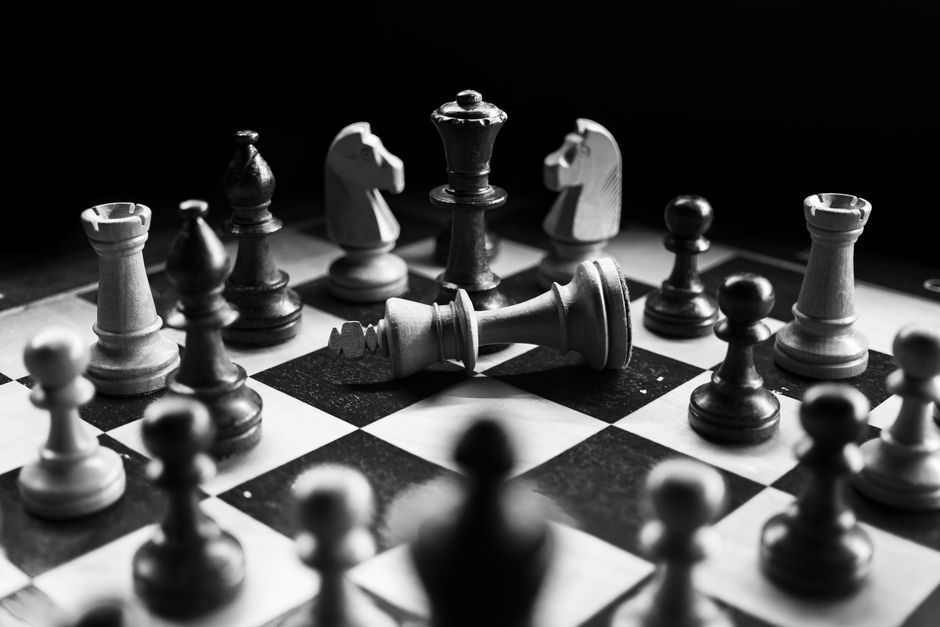
What prophylaxis really means
Prophylactic thinking is the discipline of viewing the position through your opponent’s eyes. Before you make a move, identify the opponent’s best idea and ask whether you should prevent it.
Most players think only about their own threats. The prophylactic player thinks one layer deeper, asking not "what do I want" but "what does my opponent want, and can I take it away."
The payoff is that you rarely get surprised. When you have already neutralized the enemy’s counterplay, your own plans unfold without interference and small advantages accumulate move by move.
The prophylactic thinking method
You can train this as a repeatable routine. Run it on any quiet position.
- Assume it is your opponent’s move and find their most useful plan or break.
- Judge how dangerous that plan is if you ignore it.
- Look for a move of your own that quietly makes their plan impossible or pointless.
- Compare that preventive move with your best active move.
- Choose prevention when the opponent’s threat is real, and activity when it is not.
The comparison in step five is crucial. Pure prevention with no plan of your own is passive; prophylaxis works best when a single move both stops the opponent and improves your position.
Practical tip: a good prophylactic move usually improves your own position too. If a move only stops the opponent and does nothing for you, look for a better one first.
Restraint and overprotection
Two related concepts round out prophylactic play. Restraint means stopping enemy pawn breaks so their position stays cramped, and overprotection means guarding your own key points so heavily that they can never be attacked with effect.
Restraining a pawn break can be worth more than winning a pawn, because a cramped opponent with no breaks slowly runs out of moves. The bind you create does the winning for you.
Overprotection sounds paradoxical but works. By piling extra defenders on your strongest square, you free those pieces to spring into action the moment the point is challenged, and you remove any hope of counterplay through it.
Active play versus prophylaxis
| Approach | When to use it | Typical result |
|---|---|---|
| Pure attack | You have a concrete initiative | Fast, sharp, high risk |
| Prophylaxis | Opponent has a clear plan or break | Slow domination, low risk |
| Restraint | Opponent relies on a pawn break | Enemy is left without a plan |
| Overprotection | You have a key strong point | Unshakable position, ready pieces |
| Ignoring the opponent | Rarely correct | Nasty surprises |
The bottom row is a warning. Most blunders at the club level come not from bad calculation but from never asking what the opponent intended in the first place.
Building the habit
Prophylaxis is a habit before it is a skill. Force yourself, every single move, to state your opponent’s threat out loud in your head before choosing your own move. Within a few games this becomes automatic.
Petrosian took this to an art form, defusing attacks so early that opponents never got started. Karpov used the same instinct to build slow, suffocating binds where the opponent simply had nothing to do. Both players were often accused of being dull, but their results speak for themselves: preventing counterplay is one of the surest paths to a winning position, however quiet it looks.
The strongest defensive move is the one that makes defense unnecessary. By stopping threats before they form, you spend your energy on improvement rather than firefighting, and you rob your opponent of the initiative they were counting on to save the game.
Prophylaxis in the opening and endgame
Prophylactic thinking is not just a middlegame tool; it runs through every phase. In the opening, a move like h3 or a6 is often pure prophylaxis, taking away a square from an enemy piece before it ever gets there, such as denying a bishop the g4 pin or a knight the b5 jump.
These small preventive pawn moves look modest, but they remove entire plans from the opponent’s repertoire. The cost is a single tempo; the benefit is a position where the opponent’s most natural ideas simply do not work.
In the endgame, prophylaxis often means stopping the enemy king or a passed pawn before it becomes active. A defender who cuts off the opposing king with a rook, or who blockades a passer one move early, is practicing prophylaxis at its purest.
The common thread is foresight. The prophylactic player fixes problems while they are still cheap to fix, spending one quiet move now to avoid a desperate defense later. That trade is almost always worth making.
Try it in your next game. Each move, pause and ask what your opponent is hoping for, then decide whether to let them have it. You will blunder less, get surprised less, and win more of the quiet games that used to slip away. Over time this single question reshapes your whole approach, turning you from a player who reacts to threats into one who quietly ensures they never appear at all.