
Rooks belong on open files, because an open file is the only highway a rook can travel freely. Control the open file, double your rooks on it, and invade the seventh rank, and you convert a slow positional edge into concrete pressure against the enemy’s weakest points.
Most middlegames offer at least one file that is open or half-open. Recognizing which file matters and grabbing it before your opponent is a skill that quietly decides a large share of games.
Rooks are the last pieces to enter most games, and they are the hardest to activate, which is why file control is such a common turning point. A player whose rooks are still sitting passively on the back rank is effectively playing with less material until those rooks find work. The fight for the open file is really a fight to bring your strongest heavy pieces into the game before your opponent does.

Open, half-open, and closed files
An open file has no pawns of either color on it, a half-open file has only your opponent’s pawns, and a closed file is blocked by pawns. Rooks reach their full power only on open or half-open files, so your first job is to find or create one.
Half-open files are underrated. They may not let your rook pass all the way through, but they aim it straight at an enemy pawn that cannot be defended by another pawn, giving you a ready-made target.
Closed files are useless for rooks until a pawn break opens them. This is why rook strategy and pawn breaks are tied together; often the point of a break is simply to open a file for your heavy pieces.
How to seize an open file
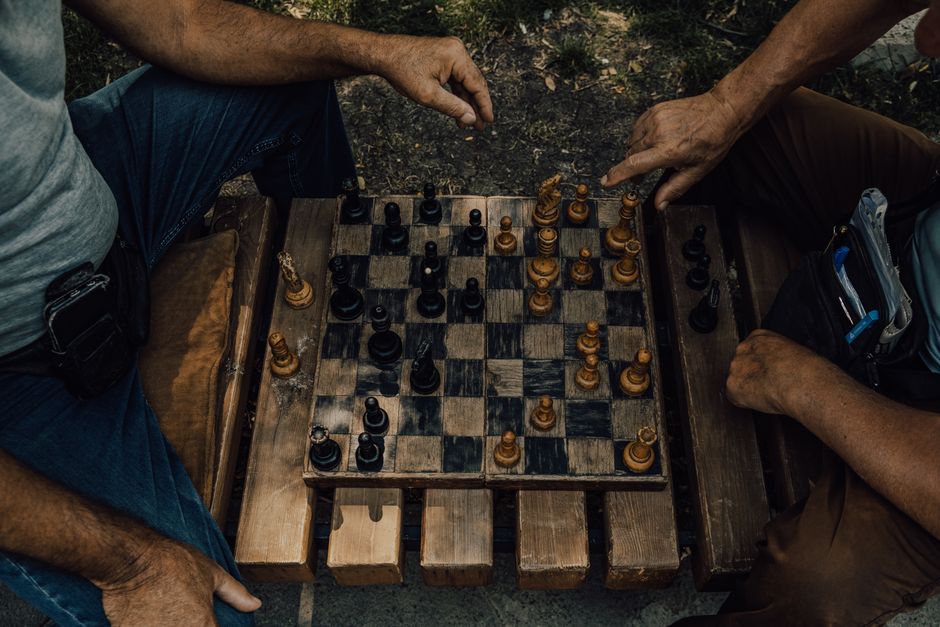
Winning a file is a small operation with a clear sequence. Do it methodically.
- Identify the file that leads to a real target, such as a weak pawn or the enemy king.
- Place a rook on that file before your opponent contests it.
- If the opponent challenges with their own rook, double yours so you win the trade of files.
- Support any invasion square on the seventh or eighth rank with a second piece.
- Convert control into penetration by landing a rook deep in the enemy position.
Speed matters. The player who occupies the open file first usually keeps it, because doubling rooks lets you meet any challenge and emerge in control.
Practical tip: an open file is only worth fighting for if it leads somewhere. A file with no target and no entry square is just empty space.
The power of the seventh rank
A rook on the seventh rank is one of the most powerful pieces in chess. It attacks pawns on their starting squares and pins the enemy king to the back rank. A pair of doubled rooks on the seventh is often winning on its own, gobbling pawns and threatening mate.
The seventh rank matters because that is where enemy pawns usually sit unmoved and undefended. One rook there is strong; two, sometimes called "pigs on the seventh," can be decisive even a pawn or two down.
To reach it, you generally need an open file plus a safe entry square. That is why file control and rank invasion are two halves of the same plan: the file is the road, the seventh rank is the destination.
Comparing your rook options
| Rook placement | Value | Best use |
|---|---|---|
| Open file | High | Penetrate to the seventh or eighth rank |
| Half-open file | Good | Pressure a fixed enemy pawn |
| Behind a passed pawn | Very high in endgames | Support your pawn or restrain the enemy’s |
| Closed file | Low | Reroute or prepare a pawn break |
| Passive on the back rank | Poor | Improve it immediately |
Use this table to grade your rooks in any position. If both rooks score "low" or "poor," finding them better work should be your top priority.
Practical rook strategy
The famous endgame rule from Tarrasch still guides middlegame play: rooks belong behind passed pawns, whether your own to push them or the enemy’s to stop them. In the middlegame, translate that into putting rooks where they have the most scope and the clearest target.
Trading rooks is a real decision, not an afterthought. If you control the only open file, avoid trades that hand the file to your opponent, but if you are being pressed, offering a rook trade can defuse an invasion.
When in doubt, ask what your worst-placed rook is doing and give it a job. Amateurs often develop everything except a rook, then wonder why their position feels lifeless.
Creating a file when there is none
Sometimes no open file exists yet, and your job is to manufacture one. The tool for this is a pawn break: a well-timed exchange of pawns opens a line that your rooks are already waiting to use.
The order of operations matters. Place your rook on the file you intend to open before you play the break, so that the moment the pawns come off, your rook already commands the fresh highway. Preparing the rook first and breaking second is the mark of a player who plans ahead.
Half-open files can become fully open the same way. If your opponent has a single pawn on a file where you also press, provoking or forcing the exchange of that pawn hands you a completely open line straight into their position.
Weigh the cost, though. Opening a file helps whoever is better placed to use it, so make sure your heavy pieces are ready before you break. An open file handed to the opponent is worse than no open file at all.
Study Capablanca and Karpov for clean rook technique. Their games make file control look effortless: spot the target, grab the file, double up, and invade. Do the same and your rooks will start winning games you used to draw.