
Chess tactics are short forcing sequences that win material or deliver checkmate, and most games between beginners are decided by them. Learn the four core patterns — the fork, pin, skewer, and discovered attack — and you will start winning pieces almost every game.

The fork
A fork is a single piece attacking two or more targets at once. The knight is the most feared forker because it can hit pieces that cannot defend each other.
- A knight on e5 might attack the king and a rook at the same time.
- The opponent saves the king, and you take the rook.
Any piece can fork — even a pawn attacking two pieces at once.
The pin

A pin freezes a piece because moving it would expose something more valuable behind it.
- An absolute pin is against the king — the pinned piece legally cannot move.
- A relative pin is against a queen or rook — moving is legal but loses material.
Bishops and rooks pin along lines. Once a piece is pinned, pile more attackers on it; it often cannot run.
Tip: when your piece is pinned to your king, look for a way to break the pin quickly — block it, capture the pinning piece, or move the king. Pinned pieces are targets.
The skewer
A skewer is a pin in reverse: the more valuable piece is in front and forced to move, exposing the piece behind it.
| Pattern | Front piece | Back piece |
|---|---|---|
| Pin | Less valuable | More valuable |
| Skewer | More valuable | Less valuable |
Check a king with a rook or bishop so the king must step aside, then capture the rook that was hiding behind it.
The discovered attack
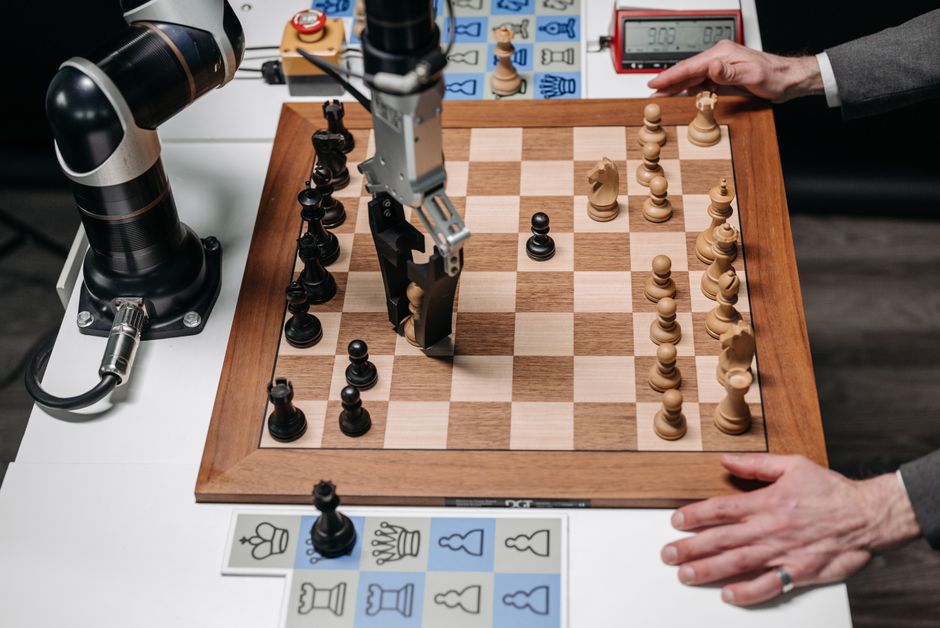
A discovered attack happens when you move one piece and reveal an attack from another behind it. When the revealed attack is a check, it is devastating — your moving piece can grab material for free while the opponent must answer the check.
How to get better at tactics
Spotting tactics is a trainable skill. Do this:
- Solve five puzzles a day from any chess app.
- On every move, ask: are any enemy pieces undefended or lined up?
- Look for checks, captures, and threats first — in that order.
Tactics reward pattern recognition, and patterns come from repetition. A month of daily puzzles will change how you see the board.